
.png)
Is Europe Finally Catching Up in Robotics?
Billion-dollar humanoid rounds to AI-powered factory automation, Europe’s robotics sector is beginning to find its footing.
August 4, 2026
Category:
Physical AI
Read time:
11 minutes
Share This:
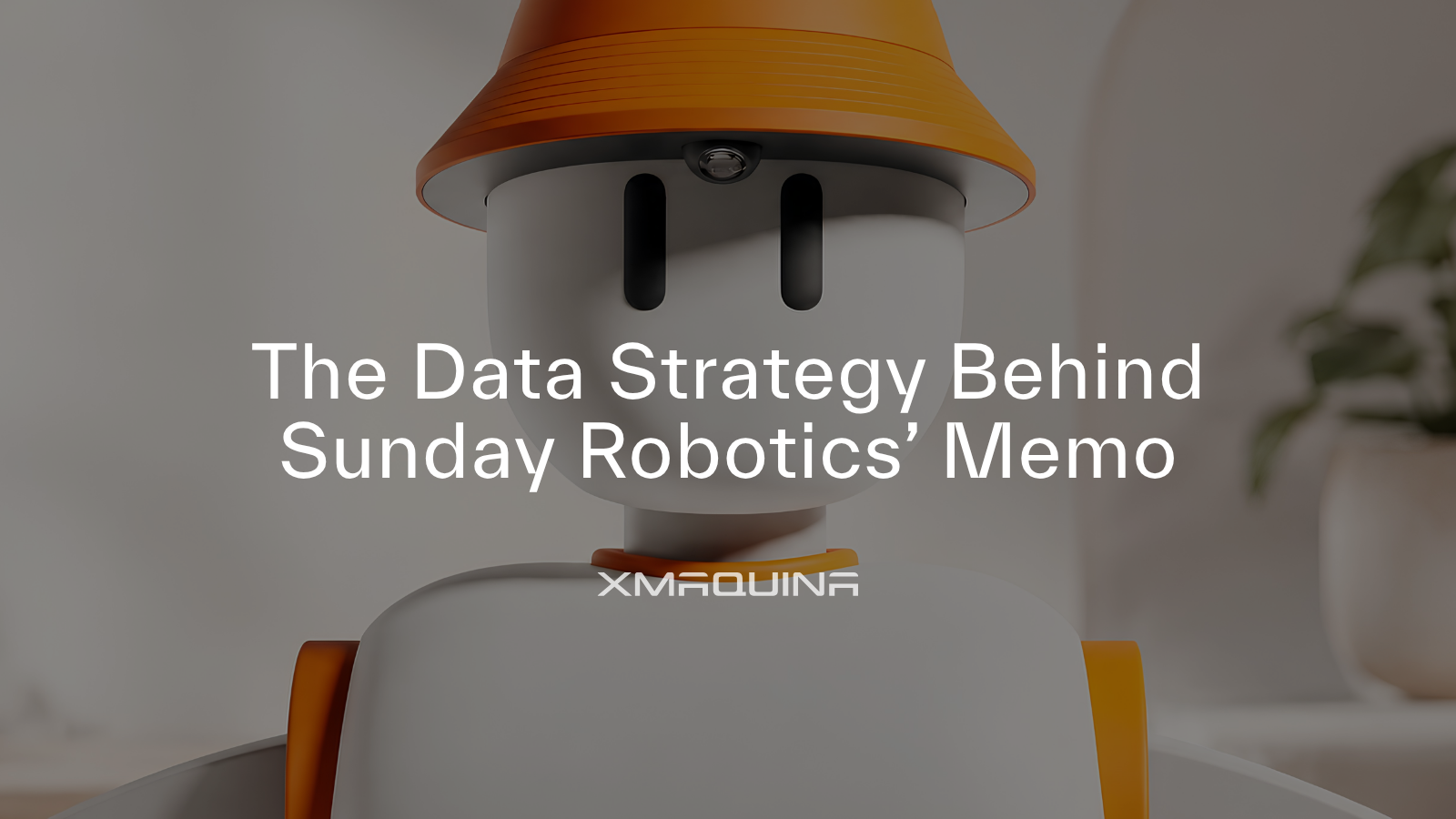
Every robotics company says data matters. Sunday, founded by Stanford dropouts Tony Zhao and Cheng Chi, built its entire company around one specific bet on how to get it.
Both founders arrived at that bet from different directions. Tony Zhao's earlier research, ALOHA, showed that expensive hardware wasn't actually what limited robot learning. Cheng Chi, Sunday's co-founder and CTO, found the same was true of the algorithm. He put it plainly in a conversation on the No Priors podcast. "I realized after training more tasks, that my code hadn't been changed for a few months. The only thing that changed was the data, and whenever the robot doesn't work, it's not the code, it's the data." That observation shaped Sunday's core decision. Instead of using robots to collect training data, the way most competitors do, Sunday collects it from humans.
Sunday's Skill Capture Gloves record hand motion, applied force, tactile feedback, and small adjustments as people do ordinary household tasks like washing dishes or folding laundry. The company has distributed over 2,000 pairs of gloves to "memory developers" across more than 500 homes, generating roughly 10 million episodes of household routines.
This is a different data strategy than VR teleoperation, which is what competitors like 1X Technologies use for their NEO robot. With teleoperation, a robot has to be physically present for every demonstration, and an operator controls it remotely through a headset. That caps how fast data collection can scale, since doubling data means doubling operator hours and robot deployments. With gloves, doubling data means shipping more gloves. A family in Seattle and a family in Miami can generate demonstrations on the same day, on different tasks, with no robot involved at all.
Sunday also designed Memo's grippers to mirror the glove's shape and sensors, narrowing the gap between what a human demonstrates and what the robot has to execute. Their Skill Transform pipeline converts recorded hand movements into robot-compatible commands, which matters because human hands have 27 bones and more than 30 joints, while Memo's grippers work under very different mechanical constraints.
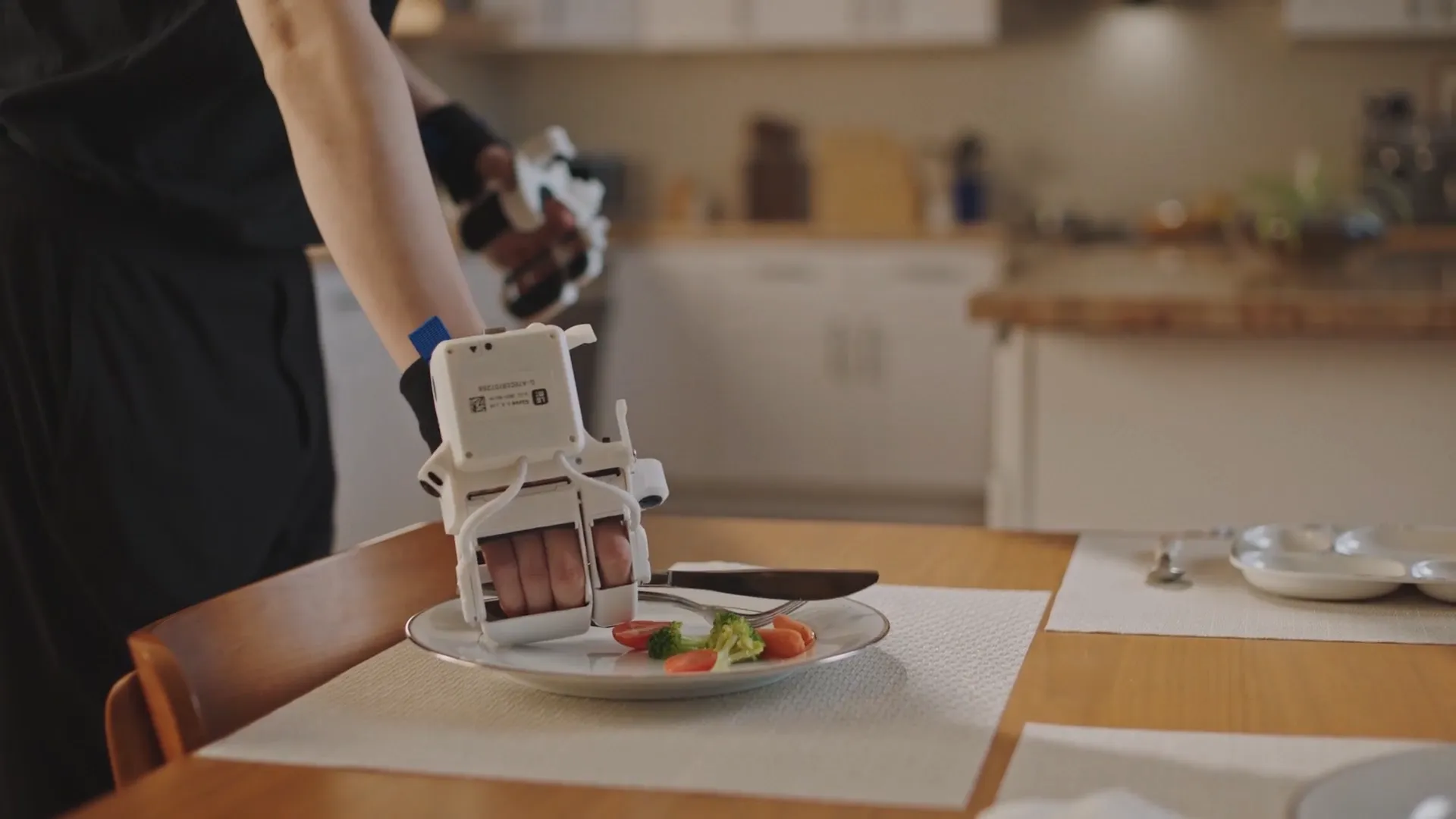
All of that glove data feeds ACT-1, Sunday's foundation model, which the company says has never observed a robot performing a task, only humans, translating that knowledge into robot movements.
ACT-2, released in July 2026, builds on it, and this is where the strategy gets tested. The model only matters if it generalizes past the homes it trained on, and that's what Sunday's ACT-2 release addresses directly. Sunday found that scaling pretraining on this human demonstration data narrows what it calls the generalization gap, the difference between how a model performs in familiar environments versus homes it has never seen.
.png)
As that gap shrinks, small amounts of additional fine-tuning start transferring to new homes instead of staying stuck to wherever the data was collected.
Sunday reports a direct link between data quality and outcomes too. At matched data volume, higher-quality pretraining data produced lower validation loss and higher real-world success, giving the team a way to improve the data mixture before running expensive physical tests. The practical result is that ACT-2 could learn a new folding technique from a single demonstration and apply it successfully to garments and rooms it had never encountered, which Sunday says is the first time an end-to-end robotics model has generalized a behavior from one example.
Fed by that pretraining, ACT-2 hit a 99.1% success rate across 785 autonomous laundry-folding attempts in 31 unseen homes, with zero home-specific data and no per-home tuning.
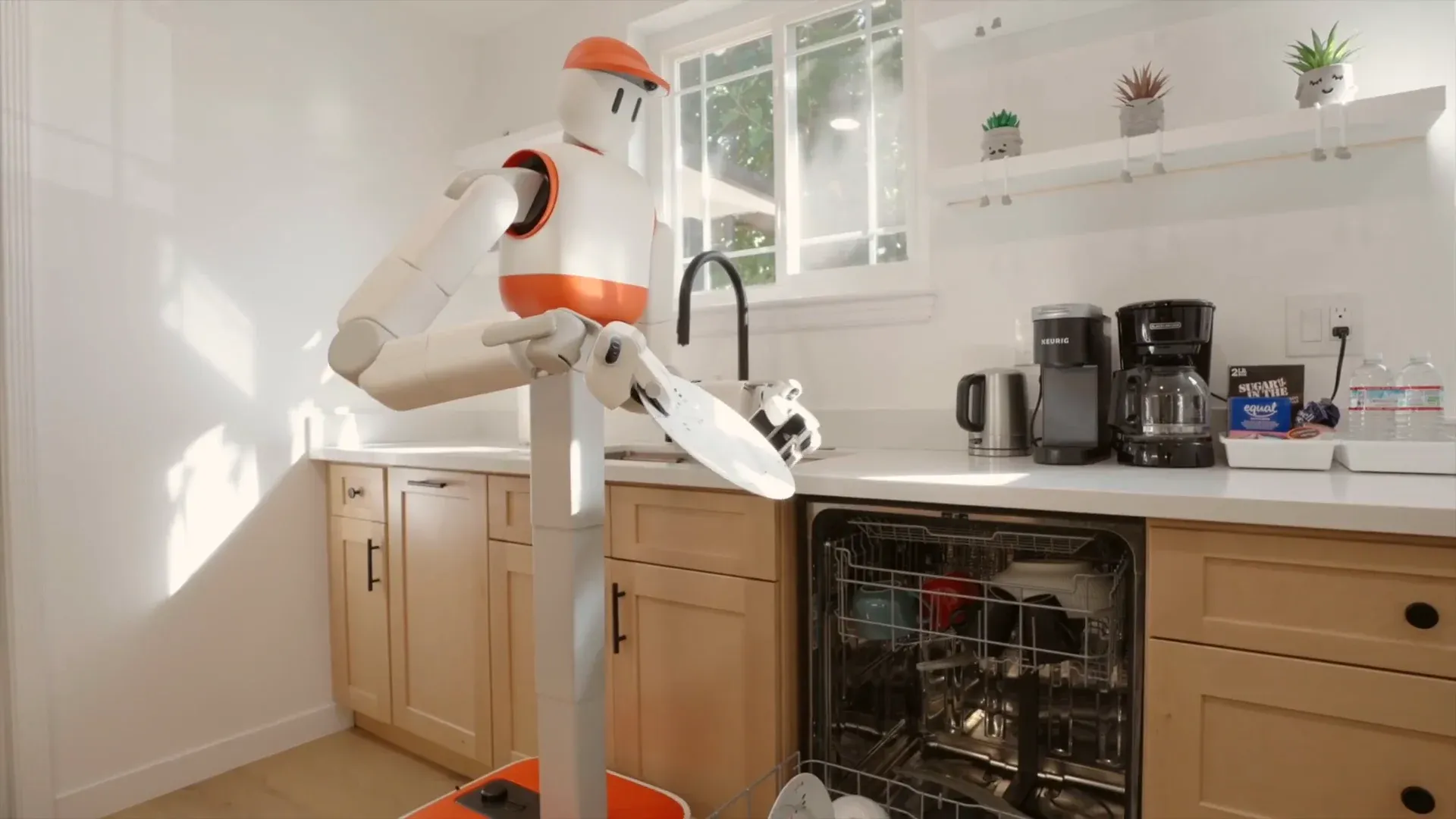
The data strategy is also now the growth strategy. Sunday raised $165 million in a Series B led by Coatue at a $1.15 billion valuation, with Bain Capital Ventures, Tiger Global, Fidelity, Benchmark, and Conviction also participating. Tony Zhao says the company has doubled headcount from 35 to 70 off more than 10,000 job applications in three months, and plans to start shipping Memo with its newest models within a few months.
Every additional home running gloves adds to the pretraining set that made ACT-2's generalization possible, which in turn should make each future round of fine-tuning more sample-efficient and easier to translate into new homes.
That philosophy is set to carry into deployment too. When Memo starts shipping to its first Founding Family homes this fall, a remote operator will step in only when a household needs help, similar to how Waymo handles remote assistance for its self-driving cars. Sunday says it won't use those interventions to collect additional training data, keeping the glove network, not the deployed fleet, as its primary source of new data. More human data in, less adaptation needed out, is the actual mechanism behind Sunday's bet that data collection matters more than any single algorithm.
SENTIENCE is a decentralized ecosystem, giving a global community early exposure to the world’s leading robotics companies before they disrupt trillion-dollar industries.
Join our Discord and connect with thousands of futurists building the SENTIENCE DAO.
Follow us on X for the latest updates.
Owner: